


How to Choose the Right Countertop Edge Profile for Your Kitchen Style
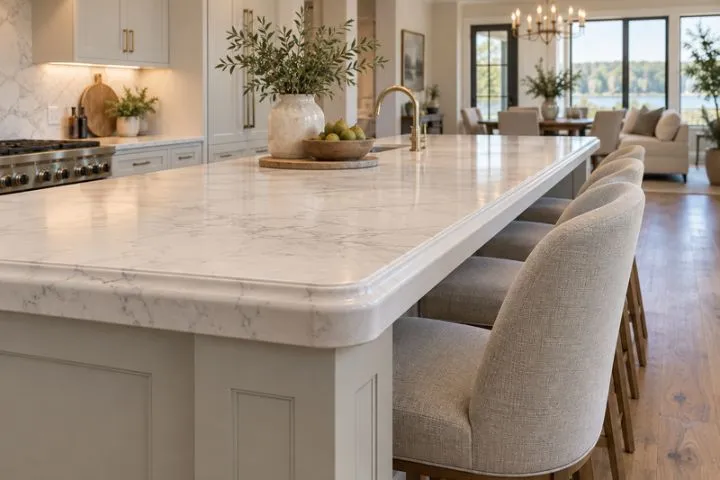
Run your hand along a kitchen island, and the first detail you feel is not the color or veining. It is the narrow line where the work surface turns downward, a detail that can appear crisp, soft, substantial, or ornate. Although it occupies little space, that edge can shift the character of the entire countertop.
Choosing among countertop edge profiles requires more than matching a sample to a broad style label. Cabinet-door lines, surface thickness, pattern movement, island length, and the way people use the counter all change how a profile reads. The selected edge should connect those elements without making the counter look heavier or busier than intended.
What Does the Edge Contribute Beyond Decoration?
An edge profile controls the countertop’s apparent thickness, catches light along the front, and shapes the transition to the cabinetry below. The same quartz pattern can look streamlined with a restrained edge or more formal when curves create deeper shadows. Once you see that relationship, you can judge individual profiles within the kitchen instead of treating the edge as an isolated decorative choice.
Countertop Edge Profiles Extend the Lines Already in the Kitchen
Lines already visible in the kitchen provide useful direction when you compare countertop edge profiles. Flat-panel cabinets, slim pulls, and straight-grain wood often favor a quiet outline, while framed doors and furniture-like details can accommodate more curvature. Bold veining adds another layer because it can make an elaborate profile feel busier than it appears on a plain sample.
The edge does not need to copy every detail to belong. A restrained bevel can add definition beside a quiet surface, while a rounded contour can soften a room filled with hard angles. Judge the balance from cabinet base to backsplash instead of relying on the words modern, transitional, or traditional alone.
Eased, Beveled, Bullnose, and Ogee Edges Shape Different Silhouettes
Edge names become easier to compare when you focus on the amount and placement of contour. Among common countertop edge profiles, eased and pencil treatments make small changes at the corners, bevels remove material on an angle, and bullnose or ogee shapes create more visible curves. Each family changes the front line differently, so a catalog name alone cannot show how assertive the result will feel.
Eased and Pencil Edges Keep the Outline Restrained
With an eased edge, a small radius softens the exposed corner while the face remains nearly square. Pencil profiles use a more visible radius, creating a gentler outline without turning the perimeter into a decorative feature.
Beveled Edges Create a Sharper Light and Shadow Line
The angled plane of a bevel catches light as a defined band across the edge. Narrow cuts stay subtle, while wider versions become stronger graphic elements against plain or lightly patterned surfaces.
Bullnose and Ogee Profiles Add Different Degrees of Curvature
Full and half-bullnose profiles round the perimeter while leaving different amounts of the vertical face visible. Ogee profiles use an S-shaped contour with stronger highlights and shadows, giving the countertop a more decorative, furniture-like finish.
What the Profile Is Cut From Changes What It Can Become
Material, countertop thickness, and construction method place real limits on countertop edge profiles. A thick slab may accommodate cuts that remove more material, whereas a thin resurfacing layer requires a profile designed for that system. Patterned surfaces introduce another concern because deeper shaping can interrupt veining or expose a front face that reads differently from the top.
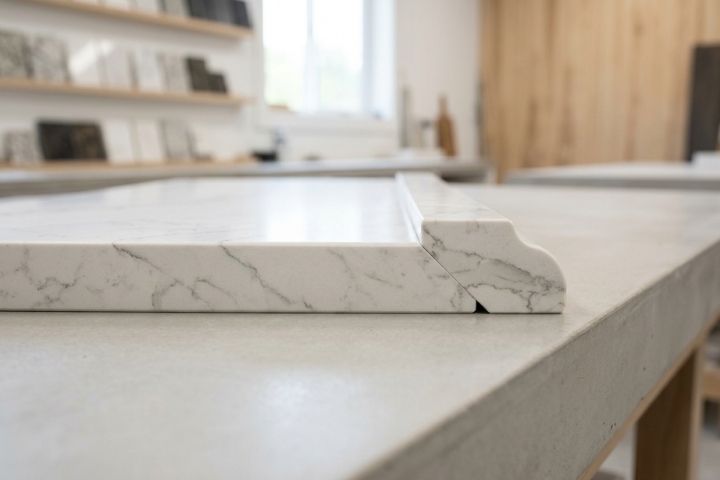
Additional material at the front can create a thicker appearance without requiring one solid piece. A laminated edge bonds an extra strip beneath the front, while a mitered edge joins angled pieces to continue the surface over a deeper face. Neither method suits every product or installation, so confirm the approved edge before measurements and ordering make changes harder.
Countertop Edge Profiles Feel Different at Prep and Seating Zones
At a prep counter, hands, boards, and dishes cross the perimeter repeatedly, so the transition should feel natural and remain easy to wipe. Crumbs may collect more easily in deep grooves or stepped details than along lightly eased or rounded countertop edge profiles, especially near baking and chopping areas.
An island overhang places the edge against forearms, elbows, and hips for longer stretches than a perimeter counter. A softened contour may feel more comfortable there, although seat height, overhang depth, and support placement also shape the experience.
Exposed corners deserve separate attention in busy walkways and homes with young children, but no profile makes a hard countertop childproof. Map how people stand, pass, eat, and clean to judge the edge through both physical contact and appearance.
Long Counter Runs Magnify Every Curve and Angle
An island exposes more of the front edge than a short perimeter run, especially in kitchen layouts visible from dining and adjoining areas. Scale changes how countertop edge profiles read because even a restrained curve becomes a repeated line across several feet. The island’s length, color contrast, and lighting should therefore influence how much detail the edge carries.
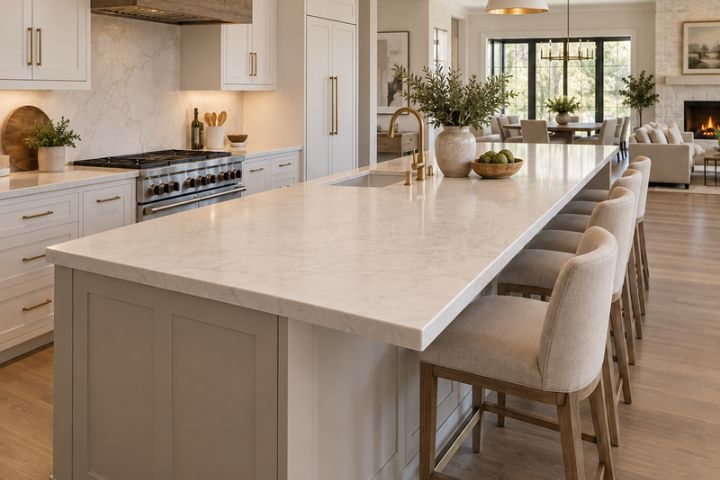
Overhangs and corners also change the view because they expose the front, underside, and side returns at once. A waterfall end continues the countertop material down toward the floor, but it is a larger surface treatment rather than an edge profile. Separating those decisions keeps one clear visual idea across the island.
Turn Countertop Edge Profiles Into a Clear Final Specification
The installer needs more than a profile name to reproduce the edge you approved. Radius, depth, and manufacturer terminology can vary among countertop edge profiles, so the final plan should identify the approved profile reference and every counter run that will receive it. Recording those details carries the intended silhouette from design approval into installation.
Kitchen & Bathroom Transformations can help Northern California homeowners check the preferred profile against the selected quartz, cabinet lines, island proportions, and resurfacing method. That comparison may uncover conflicts between the desired shape and the treatments the surface supports. Narrow the available edge options with the design team before you approve the countertop specifications.


