


Cabinet Refacing vs. Cabinet Replacement: Which One Is Right for Your Kitchen?
Two kitchens can look equally dated yet require completely different types of work. One may have sturdy boxes and a useful layout, making cabinet refacing a focused path to a fresher appearance. The other may hide water damage, limited storage, or an awkward footprint that only replacement can correct.
The right choice depends on more than budget or a preferred door style. You need to understand what each option preserves, what it can change, and how the project may affect surrounding surfaces. A direct comparison can help you invest in the improvements your kitchen genuinely needs.
Which Kitchen Problems Should Guide the Choice?
The decision begins with the kitchen’s main limitation: appearance, cabinet condition, storage, accessibility, or layout. Several concerns may exist in the same room, but they do not require the same level of work. Those needs provide a clearer basis for comparing cabinet refacing with replacement before price or finish preferences shape the scope.
Cabinet Refacing vs. Replacement: What Stays and What Changes
How much of the existing cabinetry remains is the clearest dividing line between these options. A closer look at the boxes, footprint, storage dimensions, and surrounding finishes shows how far each project can extend.
What Cabinet Refacing Keeps in Place
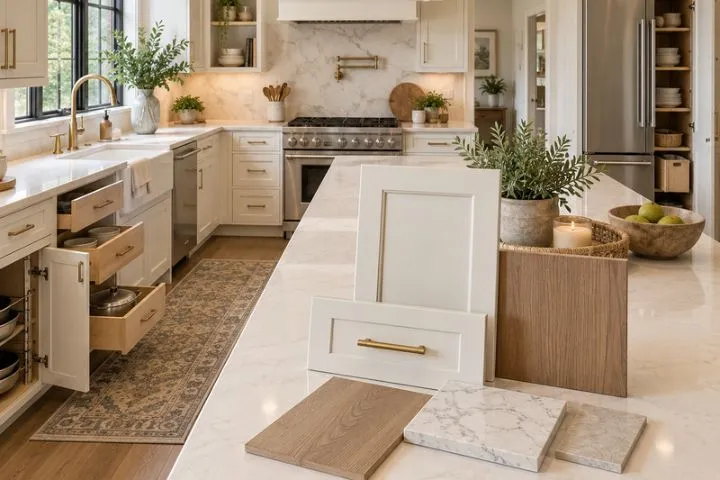
Cabinet refacing preserves structurally suitable boxes, so most openings, depths, appliance clearances, and the existing footprint remain unchanged. New doors, drawer fronts, end panels, trim, and hardware update the visible surfaces without rebuilding the cabinet system. Countertops and nearby flooring may also remain when their condition and installation allow the work to proceed without removal.
What Cabinet Replacement Opens Up
Replacement removes the boxes and allows different cabinet widths, heights, and interior configurations. Homeowners can revise storage, shift appliance locations, or correct an outdated layout, although those changes may affect countertops, flooring, walls, plumbing, or electrical connections. The broader scope provides more flexibility, but it can also extend the project beyond the cabinetry itself.
Cabinet Condition Can Rule Out One Option Before Design Begins
Paint wear, dated doors, and minor hardware problems do not necessarily justify removing stable cabinet boxes. Cabinet refacing may remain viable when the boxes are square, securely fastened, dry, and able to support new doors, drawer fronts, and hardware. Replacement becomes the better fit when water damage, swelling, sagging, delamination, or loose joints have weakened the structure.
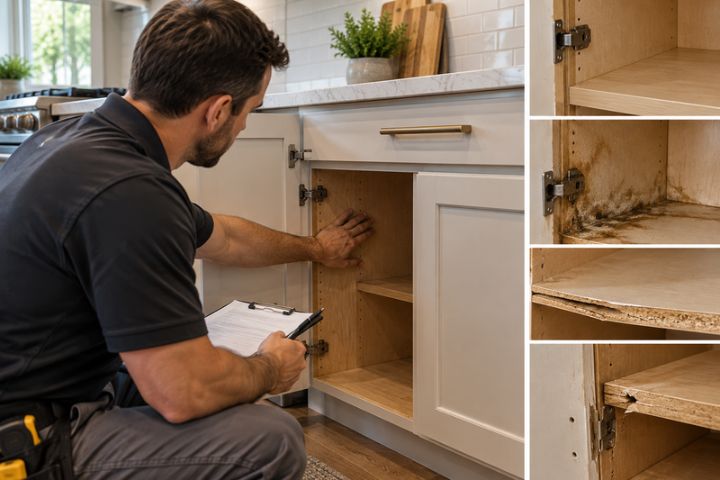
A material label alone should not determine the project. A well-constructed engineered-wood box may remain serviceable, while a neglected wood cabinet can become too distorted to retain. An in-person assessment should separate repairable wear from damage that would shorten the life of a surface-focused update.
Cabinet Refacing Preserves the Footprint While Replacement Can Rebuild It
The current layout deserves an honest test before you choose either option. When traffic paths, appliance clearances, and landing zones already function well, cabinet refacing can modernize the room without disturbing those relationships. It cannot widen a narrow aisle, add a missing pantry, or prevent a refrigerator door from blocking circulation.
New cabinetry can correct those dimensional problems, but replacement does not require an entirely different footprint. Homeowners can replace cabinets within the same layout when the structure has failed or redesign selected runs where dimensions cause daily problems. Aisle widths, door swings, and landing areas reveal how much layout change the kitchen actually needs.
Storage and Accessibility Needs May Require More Than New Doors
Refacing updates the exterior, but the existing box dimensions still determine what fits inside. When the current storage volume is sufficient and easier access is the priority, cabinet refacing works well.
Compatible pull-out shelves, drawer inserts, and corner organizers, along with updated hinges, can bring stored items closer and reduce awkward reaches. These additions improve how the cabinets work, but they cannot widen a narrow box or create capacity where none exists.
High shelves, hard-to-reach cabinet depths, or too few drawers can justify a new cabinet system. New boxes can add wider drawers, lowered storage, pull-down shelves, or open knee space suited to current routines and changing mobility needs.
Surrounding Surfaces Can Change the Cost and Timeline
The cabinet price alone doesn't show the full project impact because countertops, flooring, appliance clearances, and nearby finishes may depend on the existing boxes. With cabinet refacing, those elements can often stay in place, although installers still need to inspect countertop attachments, exposed ends, and door clearances before defining the work.
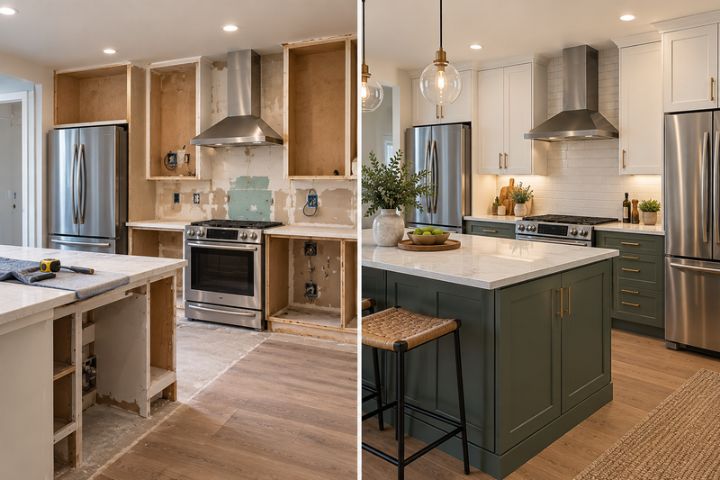
Removing the boxes can expose unfinished walls, reveal flooring gaps, or prevent existing countertops from fitting new dimensions. A fair comparison also includes the added cost and time of plumbing, electrical work, backsplash repairs, or new countertop fabrication before the kitchen returns to full use.
Cabinet Refacing or Replacement Should Solve the Underlying Problem
Cabinet refacing fits when the boxes remain sound, the footprint works, and the desired change centers on appearance or organization. Damage, layout flaws, storage shortages, or accessibility needs can justify new cabinets when the existing structure cannot accommodate the required changes. Your decision should address the problem you would still notice after the doors and finishes are new.
Kitchen & Bathroom Transformations can assess the cabinetry alongside the countertops, flooring, appliances, and utilities that shape the project scope. Priorities such as easier cooking, safer access, added storage, or minimal disruption give that assessment a clear direction. Have the team evaluate what can remain, what must change, and how each option could affect the rest of the kitchen before you commit to the work.


